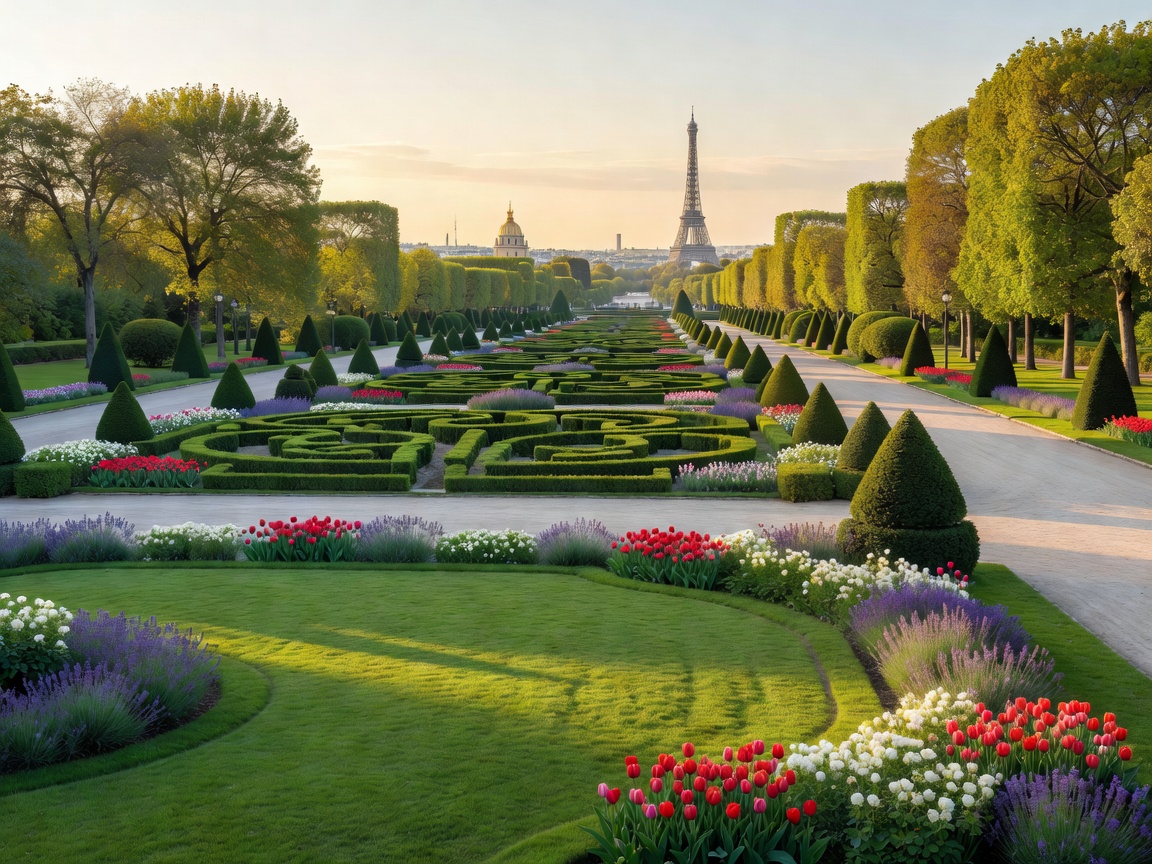
The Allure and the Overcrowding
Paris consistently ranks among the most visited cities in the world. Its romanticized image, propagated by centuries of literature, film, and art, creates an incredibly high expectation for first-time visitors. However, this immense popularity leads to a severe concentration of foot traffic around a handful of iconic landmarks. The result is often an experience characterized more by queuing and navigating through thick crowds than by absorbing the city's celebrated atmosphere. To truly understand Paris, one must look slightly to the left or right of the major thoroughfares.
The Tourist Trap: The Louvre's Mona Lisa
The Louvre is an architectural marvel and arguably the most important art museum on the planet. However, the specific quest to see Leonardo da Vinci's Mona Lisa has become the quintessential Parisian tourist trap. Visitors often endure lengthy security lines, navigate miles of crowded corridors, and finally arrive in a vast, noisy room packed shoulder-to-shoulder with hundreds of other people.
The painting itself is relatively small, measuring just 77 by 53 centimeters, and is protected behind thick, glare-reflecting bulletproof glass, kept at a considerable distance behind a physical barrier. The experience is rarely contemplative. Instead of engaging with the artwork, visitors find themselves engaged in a physical struggle to reach the front, take a quick photograph, and retreat. Considering the high entry fee and the immense time investment required, this specific pursuit yields a notoriously low return on cultural investment.
The Hidden Gem: Musée de l'Orangerie or Musée Nissim de Camondo
For an entirely different engagement with French art and history, discerning travelers turn to alternatives. The Musée de l'Orangerie, situated in the Tuileries Garden, offers a profound artistic experience. Its custom-built oval rooms house Claude Monet's monumental Water Lilies murals. Immersed in natural light, these massive, sweeping canvases surround the viewer, offering the quiet, contemplative immersion that the Mona Lisa room severely lacks. The scale of the work and the purposeful architectural design command a peaceful atmosphere.
Alternatively, the Musée Nissim de Camondo, located on the edge of Parc Monceau, provides a window into Parisian high society before World War II. It is a spectacular private mansion preserved exactly as it was, filled with 18th-century French furniture and art. Because it sits far off the standard tourist trail, you can often wander its opulent halls and beautifully appointed kitchens in near solitude, taking in the tragic but fascinating history of the Camondo family.
The Tourist Trap: The Champs-Élysées
Historically hailed as "the most beautiful avenue in the world," the modern reality of the Champs-Élysées is significantly less romantic. Today, it operates primarily as a congested, noisy thoroughfare dominated by international chain stores, fast-food restaurants, and car showrooms. The prices at cafes lining the avenue are heavily inflated, catering exclusively to a captive tourist audience. Locals generally avoid the area unless absolutely necessary, meaning the atmosphere lacks authentic Parisian character. It is a textbook example of a destination whose current reality fails to match its historical reputation.
The Hidden Gem: Canal Saint-Martin
To experience the vibrant, lived-in heart of contemporary Paris, trade the grand avenues for the Canal Saint-Martin in the 10th arrondissement. This atmospheric waterway is shaded by ancient chestnut trees and crossed by picturesque arched iron footbridges. It is flanked by independent boutiques, inventive bistros, and specialized coffee shops.
In the late afternoon and evening, the canal banks transform into a communal gathering space where locals sit by the water with wine and cheese. It offers a genuine slice of daily Parisian life, absent the inflated prices and generic retail experiences of the major boulevards. Exploring this neighborhood provides insight into the modern cultural fabric of the city.
Practical Considerations & Verdict
Choosing hidden gems over standard traps does not mean ignoring the history of Paris; it means engaging with it more effectively. A visit to the Louvre is worthwhile if you focus on the antiquities or the less-frequented wings, but centering a trip around the most famous checklist items is a recipe for exhaustion. By redirecting your itinerary toward places like the Musée de l'Orangerie or the Canal Saint-Martin, you reclaim your time, reduce your expenses, and elevate the quality of your travel experience. Paris reveals its best self to those willing to step off the heavily beaten path.